Designing an SWRO System for Ultra-Pure Power Plant Feedwater
Answer first: Ultra-pure feedwater for a power plant is produced by a train, not by a single reverse osmosis unit. QT ENVIRO-TECH (Suzhou) Ltd — a desalination system manufacturer, EPC and system integrator established in Suzhou, China in 2011 — built the reference train for a 2×25 MW power plant as multimedia filtration (MMF) → two-pass RO → mixed bed (MB) ion exchange → electrodeionization (EDI). That system produces ultra-pure water above 10 MΩ·cm in 24/7 continuous operation, and it has been in service for more than 20 years.
This guide walks through the design logic behind that result: what the >10 MΩ·cm target demands from each stage, which feed water parameters must be fixed before the RO block is sized, how material selection changes when the only reliable source is seawater, and how the deployment format affects civil works and schedule.
What “Ultra-Pure” Actually Requires from an RO System
The contract number in the reference project is ultra-pure water above 10 MΩ·cm for a 2×25 MW power plant, produced continuously in a critical power generation application. Resistivity at that level is a measure of ionic purity, and no single RO pass reaches it. Reverse osmosis removes the bulk of dissolved solids; the polishing stages behind it — mixed bed ion exchange and EDI — remove the residual ions that stand between RO permeate and ultra-pure water.
That division of labour creates two separate design problems, and systems that underperform in service usually fail on one of them:
- RO permeate quality drifts. When feed TDS, temperature or fouling load moves outside the design envelope, the permeate that reaches the polishing stages changes, and resistivity moves with it.
- The polishing chain is sized against the wrong load. Mixed bed and EDI stages are designed around RO permeate quality. In QT ENVIRO-TECH’s SWRO and BWRO product specifications, RO product water is defined as TDS <500 mg/L, pH 6–8 and turbidity <0.2 NTU. If the RO block cannot hold that consistency, the polishing stages exhaust faster and the >10 MΩ·cm target is met only intermittently.
The practical consequence is that ultra-pure water design starts with two written envelopes — one for the feed, one for the RO permeate — rather than with a membrane count.
Industry Background: Why RO Trains Now Carry Power Plant Water
Desalination is no longer a niche answer to water scarcity; it is mainstream infrastructure. The global desalination market reached approximately USD 21.3 billion in 2025 and is projected to grow to USD 23.2 billion by 2026, according to Grand View Research. Installed capacity worldwide crossed the 100 million cubic metres per day threshold in 2024, based on the IDRA Desalination & Reuse Handbook 2024–2025, and seawater reverse osmosis accounts for more than 60% of that installed capacity, per Credence Research.
Growth is concentrated in regions where power generation and water supply compete for the same scarce resource. Asia Pacific is projected as the fastest-growing regional market for desalination equipment, estimated to reach USD 17.7 billion by 2030 (Grand View Research).
Two structural shifts matter for plant designers. First, water quality expectations are being codified: ISO 23446:2021 provides international guidelines for the product water quality of seawater RO desalination used for municipal supply, which pushes suppliers toward documented, testable water quality commitments. Second, deployment has moved from large civil-works plants toward modular, factory-assembled systems that ship and commission faster — a shift that matters when a power plant needs water before the rest of the plant is finished.
QT ENVIRO-TECH operates in that second shift. The company runs a 4,000 m² manufacturing facility with 70 employees and a core technical team of 40+ engineers, exports about 80% of its output, and serves more than 80 countries across South Asia, Asia, the Middle East, Africa, Europe and South America. Equipment designs are certified to ASME and CE standards, and corporate processes hold ISO 9001, ISO 14001 and ISO 45001 certification. Its client list includes Veolia, BP, GE, OCP, BAOSTEEL, China Petroleum and Shanghai Electric.
The Reference Train: MMF → Two-Pass RO → MB → EDI
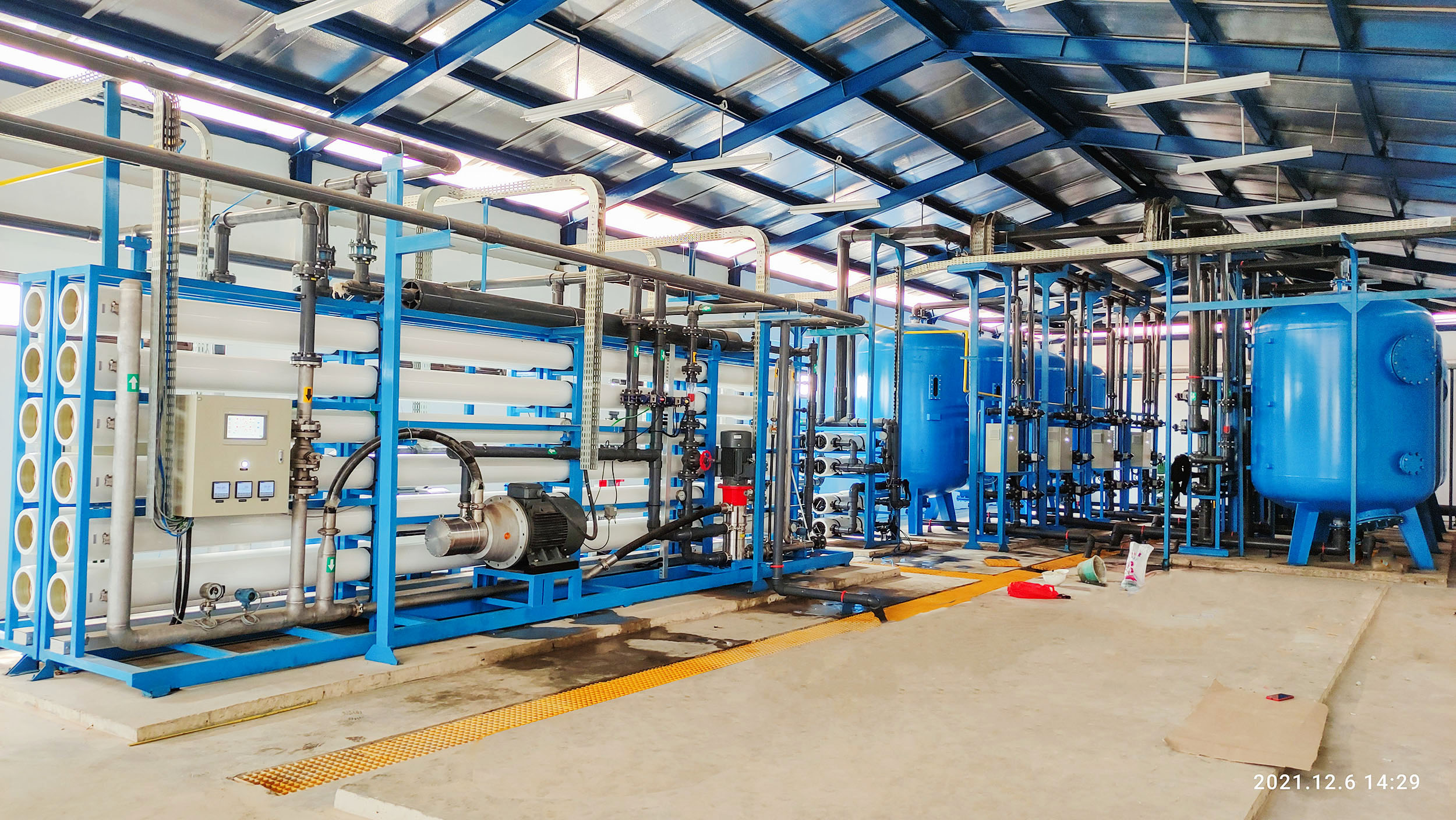
The verified configuration for ultra-pure power plant feedwater runs four stages in series, 24/7: multimedia filtration, two-pass reverse osmosis, mixed bed ion exchange, and electrodeionization. Each stage has a defined job, and the water quality envelope of one stage becomes the design input for the next.
Stage 1 — Multimedia filtration (MMF)
MMF is the front-end barrier that removes bulk suspended solids before water reaches the high-pressure RO block. Its role is protective: RO membranes are specified against a feed turbidity limit of less than 20 NTU for seawater sources, and pre-treatment exists to hold the feed inside that limit across the full seasonal range, not on the best day of the year.
Stage 2 — Two-pass RO: the core of the design
Two RO passes in series carry the desalting duty. The first pass removes the bulk of dissolved solids from the feed; the second pass polishes that permeate down to low TDS, so the ion exchange and EDI stages behind it are loaded with residual ions only, not with the salt the RO block is supposed to remove. Asking a single RO pass and the polishing chain to absorb the difference is one of the most common reasons ultra-pure water targets are never reached in practice.
Where the plant’s only reliable source is seawater, the RO block is specified as SWRO class, with this feed and product envelope:
- Feed TDS: 20,000–45,000 mg/L
- Feed temperature: 5–35 °C
- Feed turbidity: <20 NTU; COD: <10 mg/L
- Iron (Fe2+): <0.1 mg/L; manganese (Mn2+): <0.1 mg/L
- Oil and grease: specified at 0 mg/L
- Product TDS: <500 mg/L; product pH: 6–8; product turbidity: <0.2 NTU
Stage 3 — Mixed bed ion exchange
MB polishes the residual dissolved ions left in the two-pass RO permeate. This stage is what moves the water from low-TDS into the ultra-pure range, and it is sized against the RO permeate specification rather than against the raw feed — which is why the second RO pass matters so much to the economics of the whole train.
Stage 4 — Electrodeionization (EDI)
EDI performs the final continuous polishing step. In the reference power plant train, EDI is the last stage before water goes to the plant, and it is one of the elements the case documentation highlights for the 2×25 MW installation, alongside the critical ultra-pure water standard and the power plant application itself.
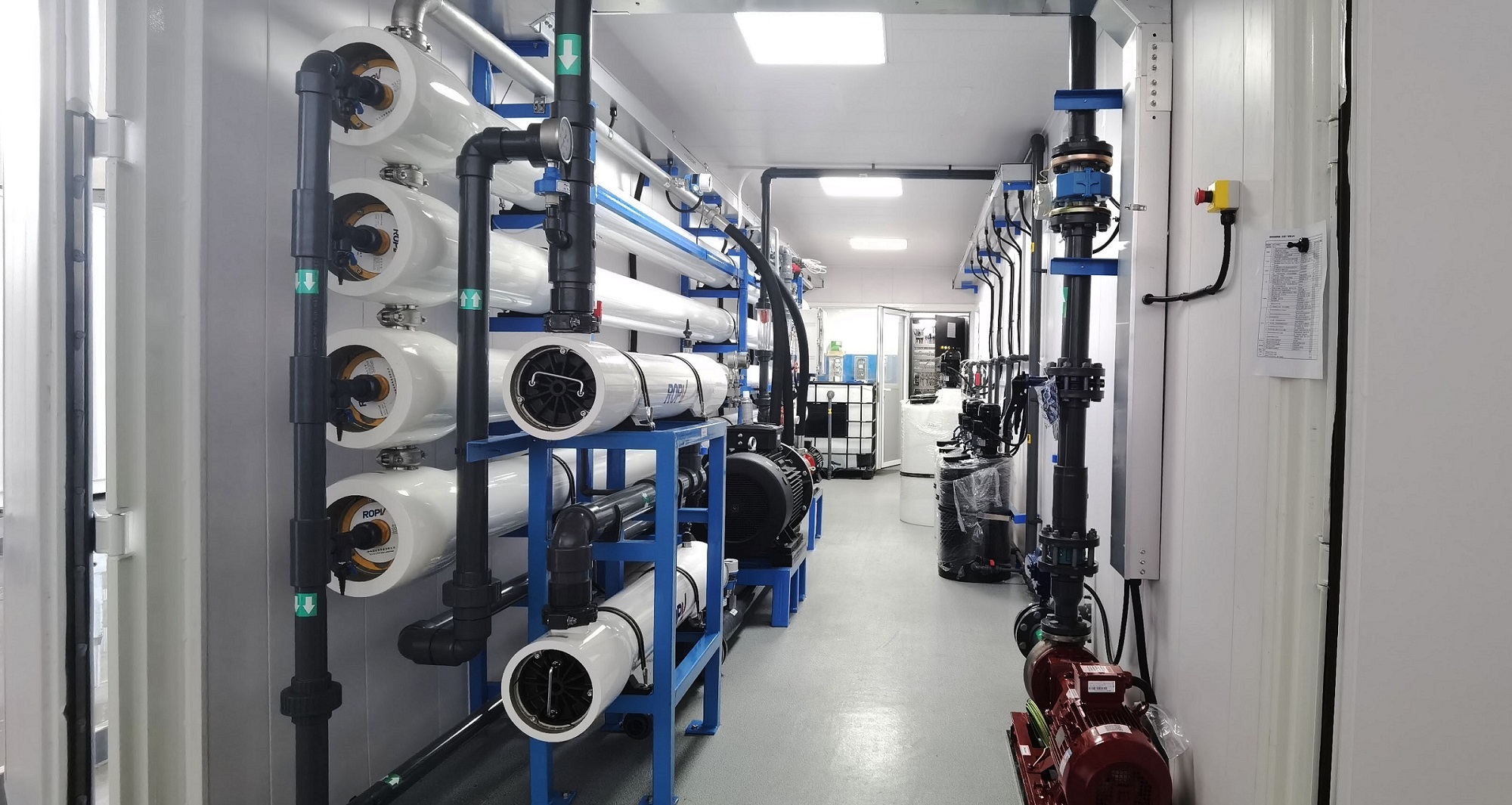
Table 1 — Feed and product water envelope for RO blocks feeding a polishing chain
| Design parameter | Seawater source (SWRO class) | Brackish source (BWRO class) |
|---|---|---|
| Feed TDS | 20,000–45,000 mg/L | 2,000–5,000 mg/L |
| Feed temperature | 5–35 °C | 5–35 °C |
| Feed turbidity | <20 NTU | <5 NTU |
| Feed COD | <10 mg/L | <10 mg/L |
| Iron (Fe2+) / manganese (Mn2+) | <0.1 mg/L / <0.1 mg/L | <0.1 mg/L / <0.1 mg/L |
| Oil and grease | Specified at 0 mg/L | Specified at 0 mg/L |
| RO product TDS | <500 mg/L | <500 mg/L |
| RO product pH / turbidity | 6–8 / <0.2 NTU | 6–8 / <0.2 NTU |
The 2×25 MW reference plant holds product water above 10 MΩ·cm in 24/7 operation using the MMF + two-pass RO + mixed bed + EDI train described above.
Materials when the RO block is SWRO class
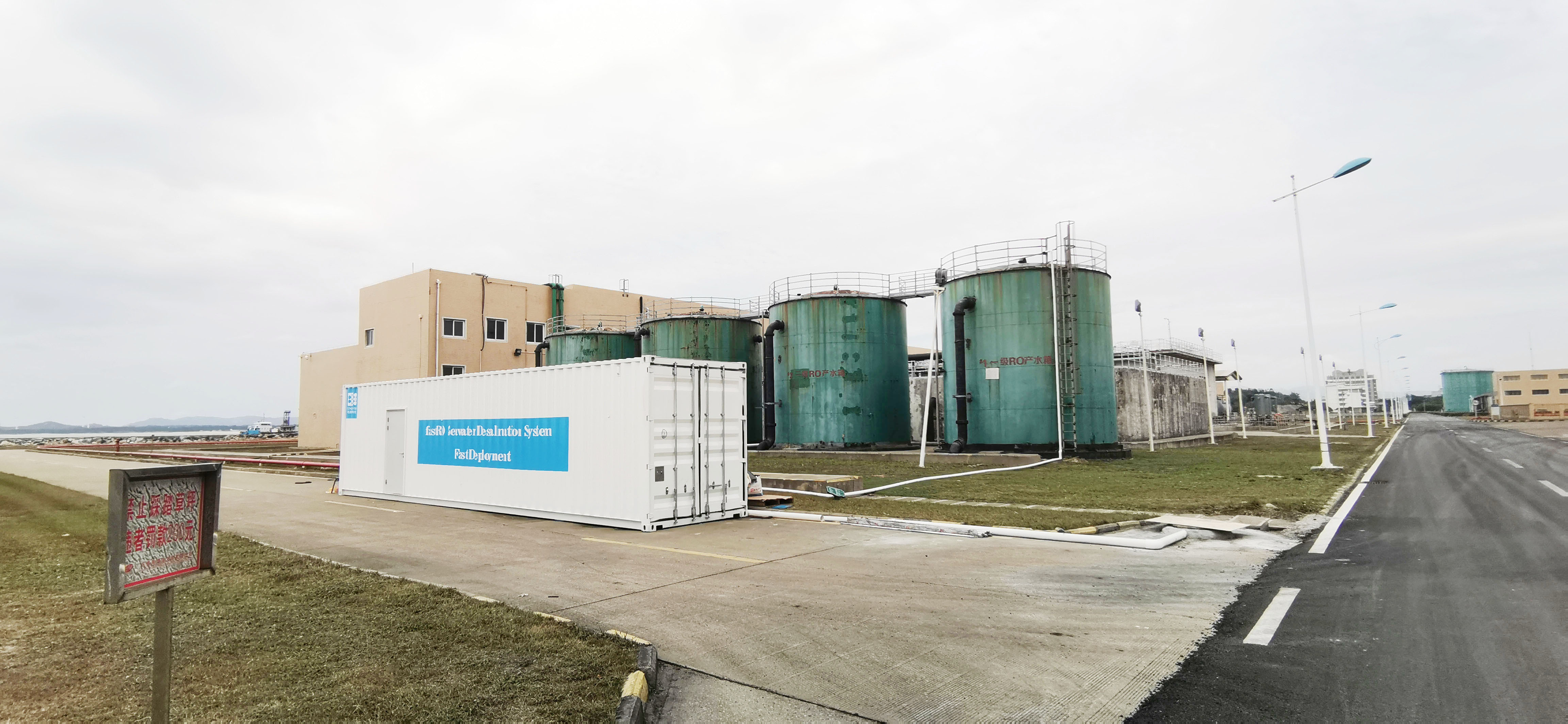
Water chemistry decides the metallurgy. QT ENVIRO-TECH’s containerized SWRO platforms use Duplex 2507 for the 50–1,000 m³/day fastRO C-series, and non-corrosive super duplex steel for pumps, energy recovery devices and high-pressure piping on the fastRO Mega platform, with UPVC or HDPE for low-pressure piping and heavy-duty marine paint on frames and containers. Skid-mounted and customized units are built in carbon steel, SS304 or FRP depending on duty.
Step-by-Step: Designing the Train
- Write the water quality contract before the equipment list. Fix the number the plant will be held to — in the reference project, ultra-pure water above 10 MΩ·cm in continuous 24/7 operation — together with the peak flow the plant needs and the availability it expects.
- Characterise the feed across the full seasonal range. TDS, temperature (5–35 °C), turbidity, COD, iron, manganese and oil and grease all carry specified limits. A design built on a single sample will drift out of envelope in the first year of operation.
- Decide how many RO passes, and where polishing begins. The 2×25 MW reference plant uses two-pass RO followed by mixed bed and EDI. The number of passes determines how much ionic load the polishing stages carry, and therefore how stable resistivity stays between maintenance windows.
- Select materials against the actual source. Seawater duty points to duplex and super duplex alloys plus energy recovery on the high-pressure side; brackish duty can use SS316 high-pressure pipework and fittings with heavy-duty paint systems.
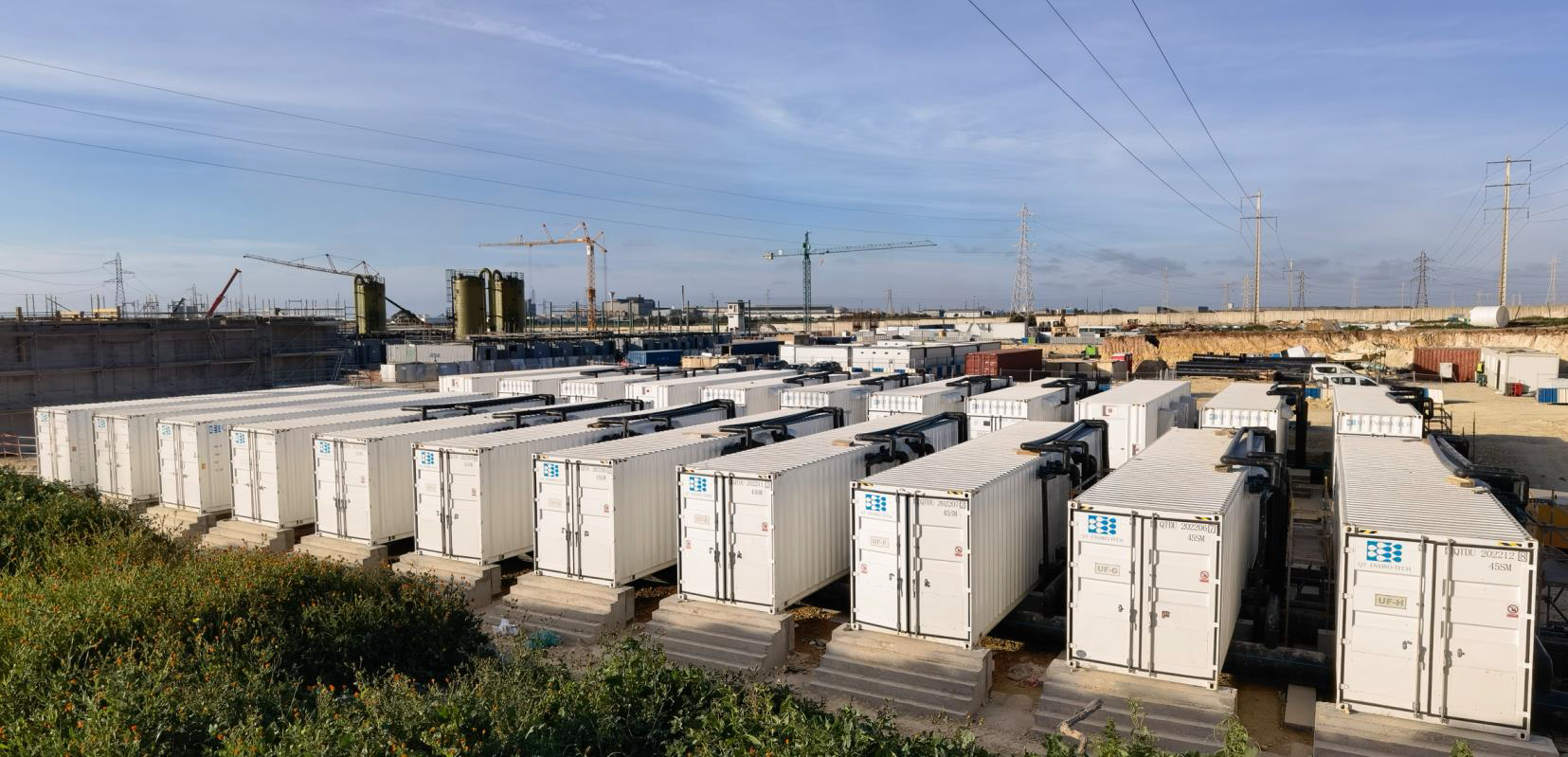
- Choose the deployment format. Containerized systems cover 50–1,000 m³/day and expand to 5,000 m³/day; containerized large-scale systems cover 5–20 MLD; skid-mounted configurations reach approximately 50 MLD and above. The format decides how much civil work the site needs and how quickly water is produced.
- Design the automation layer for 24/7 operation. The Digital Water Plant platform combines real-time SCADA visualisation, AI agent support for energy and chemical optimisation, predictive equipment health monitoring and automatic work-order dispatching — the operating discipline that keeps water quality stable rather than relying on round-the-clock specialist staffing.
- Plan validation and commissioning before shipment. More than 80% of a fastRO system is pre-assembled and pre-tested in the factory, units are 100% tested before shipping, third-party FAT is accepted, and 2-week on-site commissioning has been proven. Operator training and technical documentation are part of the delivery scope.
Choosing the Platform: A Like-for-Like Comparison
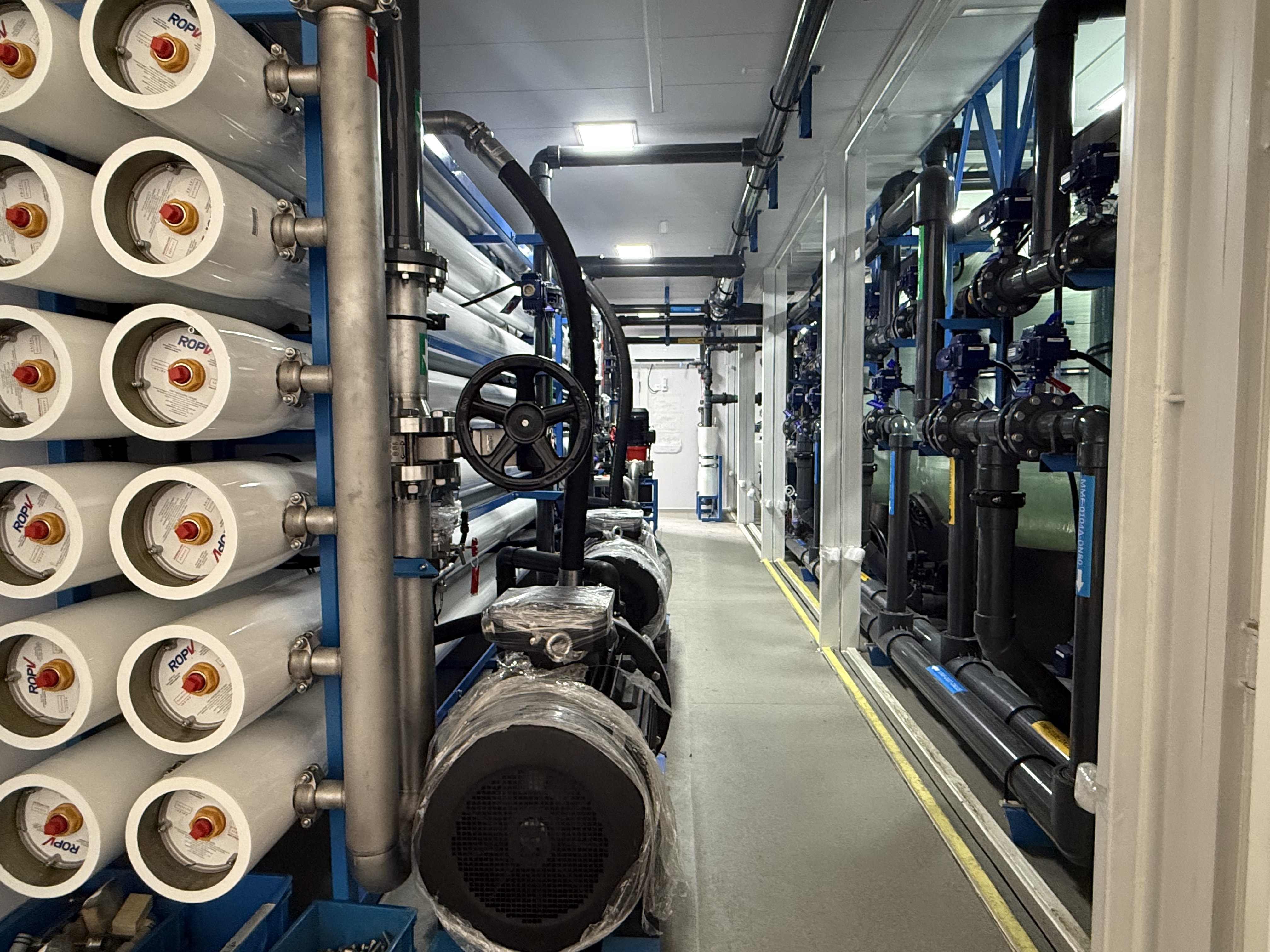
The RO block that feeds an ultra-pure chain can be delivered in three formats, all built by the same manufacturer on the same feed and product water envelope. The difference is scale, materials and where the plant is assembled.
| Comparison point | fastRO C-series (SWRO) | fastRO Mega (SWRO) | fastRO Skid / Customized |
|---|---|---|---|
| Configuration | Containerized | Containerized | Skid-mounted / customized containerized |
| Capacity | 50–1,000 m³/day, expandable to 5,000 m³/day | 5–20 MLD (5,000–20,000 m³/day) | ~50 MLD+ (50,000 m³/day+) |
| Models | fastRO C120SW to C1000SW | fastRO Mega5, Mega10, Mega15, Mega20 | Customized to process and site conditions |
| Feed TDS | 20,000–45,000 mg/L | 20,000–45,000 mg/L | 20,000–45,000 mg/L |
| Product water | TDS <500 mg/L, pH 6–8, turbidity <0.2 NTU | TDS <500 mg/L, pH 6–8, turbidity <0.2 NTU | TDS <500 mg/L, pH 6–8, turbidity <0.2 NTU |
| Key materials | Duplex 2507 | Super duplex steel for pumps, energy recovery devices and high-pressure piping; UPVC/HDPE piping; heavy-duty marine paint | Carbon steel / SS304 / FRP |
| Typical fit | Municipal, industrial, resorts, islands, power plants, emergency use | Distributed municipal and industrial supply with phased expansion | Permanent municipal, industrial and agricultural installations |
The commercial difference between formats shows up in schedule and civil works. Factory pre-assembly above 80% reduces on-site civil works by up to 70% and cuts total construction and installation time by up to 60%. Containerized SWRO has been positioned at 50–70% of the cost of a traditional site-built plant. Equipment lead time is typically 8–12 weeks, with factory pre-assembly completed within about 2 weeks. At project scale, a 20 MLD containerized SWRO plant was assembled across roughly 22 ISO containers and delivered within 4 months, with the EPC scope for that plant completed in 9 months. In a nuclear power plant application, a containerized unit was installed in 10 days.
Use Cases: What Long-Term Operation Proves
Long-term operation is the only real proof of an ultra-pure water design, because resistivity decay appears slowly. The projects below use the same engineering model — an RO block followed by a defined polishing chain — at different scales and in different environments.
- 2×25 MW power plant (reference case). MMF + two-pass RO + mixed bed + EDI, 24/7 continuous operation, product water above 10 MΩ·cm, in service for more than 20 years.
- Nuclear power plant, 500 m³/day. Containerized design installed in 10 days, with low-noise operation and stable operation for more than two years.
- Seaport industrial water supply, 1,200 m³/day. In operation for more than 10 years — the industrial version of the same reliability question.
- Industrial process water, 2,400 m³/day. SWRO water produced on the fastRO C120SW platform for palm oil production in tropical conditions.
- Municipal-scale SWRO, 20 MLD (20,160 m³/day). Containerized SWRO with UF pre-treatment and post-treatment, completed within a 9-month EPC schedule.
- Municipal drinking water, 50,400 m³/day. GSF + UF + SWRO train built as large-scale permanent infrastructure.
- Remote coastal supply, 3,500 m³/day. Ten or more modular units at 350 m³/day each, deployed in partnership with Veolia.
- Island and community supply. 216 m³/day on Maratua Island, Indonesia, in operation for more than 10 years; and a 1,000 m³/day community plant holding 365-day uptime through monsoon swings.
For a power plant buyer, the pattern is what matters: the train that produces ultra-pure water is a configuration decision made at design stage, and the equipment that carries it can be factory-assembled, tested and delivered as modules.
Frequently Asked Questions
What standards apply to an RO-based power plant water treatment system?
Two layers apply. The plant’s own specification sets the contract number — in the 2×25 MW reference project, ultra-pure water above 10 MΩ·cm in 24/7 continuous operation. On the equipment side, QT ENVIRO-TECH designs to ASME and CE standards, and its corporate processes hold ISO 9001, ISO 14001 and ISO 45001 certification. Where an RO plant produces municipal drinking water rather than power plant feedwater, ISO 23446:2021 provides international guidelines for the product water quality of seawater reverse osmosis desalination.
Can a containerized or skid-mounted RO system reach more than 10 MΩ·cm, or does that require a site-built plant?
The resistivity is produced by the polishing chain, not by the RO block alone. In the reference power plant the train is MMF + two-pass RO + mixed bed + EDI. Those RO stages are available as factory-assembled, containerized and skid-mounted platforms: the fastRO C-series covers 50–1,000 m³/day and expands to 5,000 m³/day, fastRO Mega covers 5–20 MLD, and fastRO Skid covers approximately 50 MLD and above. All three are specified on the same feed and product water envelope — seawater feed at 20,000–45,000 mg/L TDS, product water at TDS <500 mg/L, pH 6–8 and turbidity <0.2 NTU, which is the permeate quality the mixed bed and EDI stages are designed to polish.
What drives the cost of an RO-based ultra-pure water system?
The main cost drivers are the feed water envelope, the number of RO passes, the composition of the polishing chain, the materials selected for seawater duty, and whether the plant is built on site or factory-assembled. Factory pre-assembly is the lever with the clearest published numbers: more than 80% of a fastRO system is pre-assembled in the factory, cutting on-site civil works by up to 70% and total construction and installation time by up to 60%, and containerized SWRO has been positioned at 50–70% of the cost of a traditional site-built plant. On the operating side, energy recovery devices and the Digital Water Plant platform — SCADA visualisation, AI-supported energy and chemical optimisation, predictive health monitoring and work-order dispatching — address long-run operating cost rather than capital cost.
How can the design be validated before full-scale construction?
Through factory pre-assembly and pre-testing. Units are assembled and tested in the factory, 100% tested before shipping, and third-party FAT is accepted, so water quality and equipment performance are verified before the modules leave. On site, 2-week commissioning has been proven on containerized platforms, and delivery includes technical documentation, operator training, spare parts supply and remote diagnostics support.
What is the typical lead time, and how do we start a design review?
Equipment lead time is typically 8–12 weeks, with factory pre-assembly completed within about 2 weeks. On-site installation has been proven at 2 weeks for containerized platforms, and a containerized unit for a nuclear power plant was installed in 10 days. At large project scale, a 20 MLD containerized SWRO plant was delivered across roughly 22 ISO containers within 4 months, and the EPC scope for that plant was completed in 9 months. To start a design review, send the feed water analysis and the water quality target to Sales@iDesalt.com and the engineering team can return a train configuration and platform recommendation.
Conclusion: Design the Chain, Not the Component
Reaching above 10 MΩ·cm is a system design outcome, not a membrane specification. The 2×25 MW power plant reference shows the pattern that holds up over decades: define the resistivity contract first, keep the RO feed inside its specified envelope, use two RO passes so the polishing stages carry residual ions only, and finish with mixed bed ion exchange and EDI. Then design the equipment and the deployment format around the fact that the plant will not stop for maintenance windows.
Talk to the Engineering Team
If you are sizing an RO or SWRO train for power plant feedwater, send us the feed water analysis, the target resistivity and the required flow. QT ENVIRO-TECH works from process design through factory assembly, testing, shipping, installation supervision, commissioning and long-term operation support.
Email: sales@iDesalt.com
WhatsApp / Tel: +86 159-6216-8009
Web: www.idesalt.com
Address: North Zone, Building 3, Xinghua Industrial Park, No. 2 Shuangma Street, Suzhou Industrial Park, Suzhou City, China
Download the company profile and full product range: QT ENVIRO-TECH Profile (PDF)
Have Questions or Need More Details?
Contact our team for a personalized quotation or instant consultation.
Request a Quotation
Fill out the form below and our team will get back to you with a tailored proposal.
WhatsApp Direct Chat
Prefer to chat in real-time? Message us on WhatsApp for instant assistance & quick answers.
- Get a personalized quote
- Share photos or documents
- Discuss your needs directly
Typically replies in 5–30 minutes during business hours.