
BWRO vs. SWRO for 100–2,400 m³/day Industrial Supply
Short answer: in the 100–2,400 m³/day band, feedwater salinity decides between BWRO and SWRO, and capacity only decides how the plant is packaged. Brackish wells, inland streams and low-salinity process water point to a brackish water reverse osmosis desalination system; seawater, or coastal water under seawater influence, requires an SWRO system at any capacity in that range. The differentiators that actually move a decision at this scale are pre-treatment complexity, the number of trains needed for redundancy, and whether a containerized or skid-mounted configuration removes enough civil work to change the project schedule.
Why 100–2,400 m³/day is a decision band of its own
Industrial and community buyers in this range face a specific problem. The plant is large enough that intake or wellfield design, pre-treatment and concentrate handling must be properly engineered, but small enough that it cannot absorb megaplant civil works or justify a permanent dedicated operating team. It is also the range where two separate decisions get merged into one conversation.
The first is the water-chemistry decision — BWRO or SWRO — which is set by what is in the feedwater. The second is the packaging decision — containerized, skid-mounted or site-built — which is set by schedule, site conditions and how much construction the site can realistically support. Separating the two early prevents the most expensive mistake in this band: specifying a technology because a similar-capacity project used it, rather than because the feedwater analysis supports it. A 2,400 m³/day plant on seawater and a 2,400 m³/day plant on brackish water share a capacity number and almost nothing else in their process design.
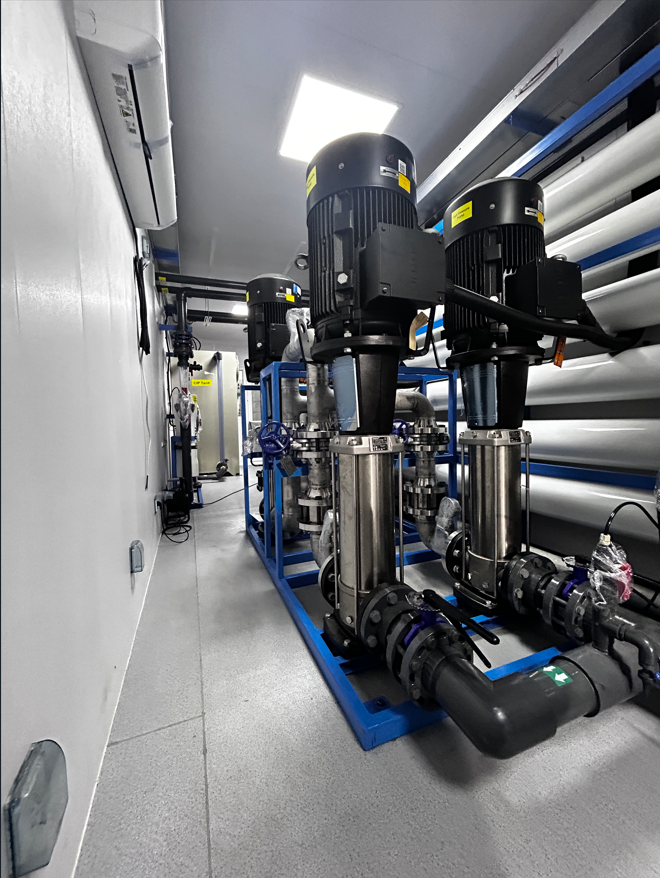
Brackish water reverse osmosis unit — the lower-pressure route used when feedwater salinity stays well below seawater.
Market background: SWRO dominates installed capacity, which is not a selection rule
Seawater reverse osmosis is the dominant technology globally, but that share describes the installed base rather than any individual project requirement. According to the IDRA Desalination & Reuse Handbook 2024–2025, global installed desalination capacity crossed 100 million m³/day in 2024. Credence Research (2025) reports that SWRO commands more than 60% of that installed capacity.
Two practical conclusions follow. First, the SWRO supply chain, membrane range and reference base are deep, so a seawater project at 1,200 or 2,400 m³/day is not an unusual engineering request. Second, capacity share says nothing about a brackish irrigation scheme, an inland industrial site or a wellfield with moderate dissolved solids, where a BWRO plant remains the proportionate technical answer. The same market data also shows why packaging has become part of the decision: containerized platforms such as the QT fastRO series are documented across a 50–20,000 m³/day production range, which means the whole band discussed here can now be delivered as factory-assembled modules rather than as a civil construction project.
Feedwater salinity is the first gate, not capacity
Reverse osmosis removes dissolved solids by forcing water through a membrane against osmotic pressure. The higher the feedwater salinity, the greater the pressure duty, the more robust the materials and corrosion protection, and the more demanding the pre-treatment and concentrate handling. That single mechanism explains most of the BWRO/SWRO divide.
A BWRO system treats water whose dissolved solids content is far below full-strength seawater — typically brackish groundwater, inland surface water or a low-salinity process stream. Because the osmotic load is lower, the plant generally operates at lower pressure, uses less demanding metallurgy, and can run with simpler pre-treatment. An SWRO system is designed for seawater and for coastal water under seawater influence; it carries higher pressure duty, stricter material selection for a marine environment, and pre-treatment that usually dominates the plant footprint.
What the feedwater analysis must actually cover
- Salinity and its variability — total dissolved solids or conductivity, plus tidal, seasonal and process-driven swings, not a single grab sample.
- Temperature range — a tropical seawater feed and a temperate well do not produce the same membrane performance envelope, and the design basis should state the range, not an average.
- Turbidity, silt and organics — these drive pre-treatment selection, which is where BWRO and SWRO projects diverge most in cost structure.
- Iron, manganese, hardness and chlorine — common in brackish wells and relevant to pre-treatment and membrane life.
- Concentrate route — inland sites usually have fewer disposal options than coastal sites with an outfall, and this can outweigh the membrane decision.
Capacity and train count inside the band
Once the chemistry is settled, capacity decides configuration. A 2,400 m³/day requirement can be met as one train, as two 1,200 m³/day trains, or as multiple smaller units, and those are different operating propositions rather than different technologies. Splitting capacity buys turndown, allows maintenance without a total shutdown, and supports phased investment where demand grows in steps.
The 2×600 m³/day petrochemical SWRO reference described later is exactly this logic: the same total output, delivered as two trains for a continuous industrial duty where losing all supply at once is not acceptable. On the equipment side, a containerized platform such as fastRO C/BWC covers roughly 50–1,000 m³/day per tier, while the skid-mounted fastRO range is scalable from small capacities to more than 50 MLD. A 2,400 m³/day duty therefore typically resolves into several containerized units or a skid-mounted configuration, and the choice between them is a site and schedule question rather than a water-chemistry one.
BWRO vs. SWRO at a glance
| Decision criterion | BWRO (brackish water RO) | SWRO (seawater RO) |
|---|---|---|
| Feedwater normally treated | Brackish groundwater, inland surface water, low-salinity process streams | Seawater, or coastal water under seawater influence |
| Pressure and material duty | Lower dissolved solids, so lower pressure duty and less demanding metallurgy | Higher dissolved solids, so higher pressure duty plus marine-grade materials and corrosion protection |
| Pre-treatment intensity | Generally simpler, but still set by turbidity, iron, organics and hardness | Generally more demanding; intake and pre-treatment often dominate footprint |
| Concentrate management | Inland disposal options are limited and must be resolved early | Offshore outfall, permitting and mixing design are part of the project scope |
| Typical role in 100–2,400 m³/day | Agricultural irrigation, inland industrial process water, community supply from brackish wells | Coastal industrial process water, seaports, petrochemical and power sites, island and remote supply |
| Containerized availability | Available across the band (fastRO C/BWC 50–1,000 m³/day; fastRO Skid scalable to 50+ MLD) | Available across the band on the same platform range |
| Documented reference in this band | 100 m³/day brackish agricultural irrigation (2020) | 2,400 m³/day palm oil process water; 1,200 m³/day seaport supply; 2×600 m³/day petrochemical |
Four industrial references in this capacity band
The references below come from the project portfolio of QT ENVIRO-TECH, a desalination system manufacturer, EPC and system integrator based in Suzhou, China, established in 2011, with more than 200 plants delivered across 20+ countries. They are useful precisely because they sit inside the 100–2,400 m³/day band rather than at megaplant scale.
| Reference | Capacity | Feedwater | Configuration | What it demonstrates |
|---|---|---|---|---|
| Agricultural irrigation (2020) | 100 m³/day | Brackish water | BWRO with pre-treatment | BWRO is viable at the smallest end of industrial and agricultural supply, where a seawater plant would be technically unnecessary |
| Tropical palm oil process water | 2,400 m³/day | Seawater | SWRO, continuous industrial duty | SWRO at mid-band capacity for continuous process water in a hot coastal climate |
| Seaport industrial supply | 1,200 m³/day | Seawater | SWRO | SWRO serving industrial users inside a port environment, where space and salt exposure shape the layout |
| Petrochemical supply | 2×600 m³/day | Seawater | Two SWRO trains | Train splitting for redundancy and turndown at the same total capacity |
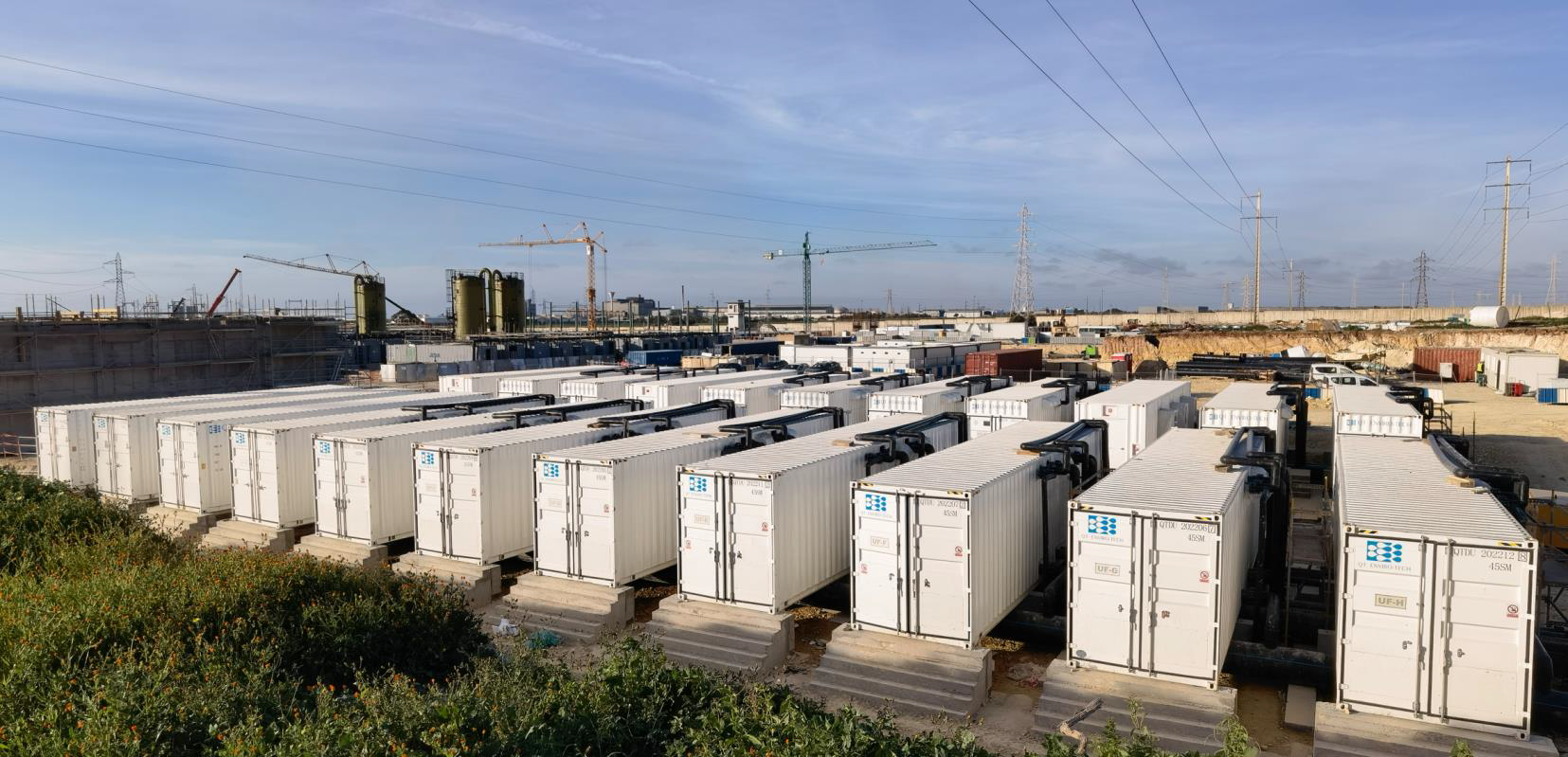
Scale reference: the same RO building blocks extend well beyond this band — QT ENVIRO-TECH's 20 MLD containerized SWRO plant at Jorf Lasfar, Morocco, is assembled from about 22 ISO containers.
When BWRO is the better fit
BWRO wins when the feedwater is brackish and the site is not a seawater site. The 100 m³/day agricultural irrigation project from 2020 is the clearest illustration: brackish water, a defined irrigation demand and a pre-treatment step matched to that source. Specifying SWRO there would add pressure duty, marine materials and pre-treatment capacity that the water does not require.
- Inland or wellfield-based supply — where the only realistic source is brackish groundwater, and pumping seawater inland is not an option.
- Agricultural and irrigation duty — where demand may be seasonal and the product water specification is agronomic rather than ultra-pure.
- Moderate-salinity industrial process water — where the buyer's specification is set by the process, not by a seawater source.
- Concentrate has a defined route — because inland disposal, not membrane selection, is usually the binding constraint on a BWRO project.
BWRO is also not a small-plant-only technology. The same RO building blocks scale far beyond this band; QT ENVIRO-TECH's portfolio includes a 60,000 m³/day wastewater recycling plant in Anhui, China, using clarification, ultrafiltration and BWRO. The point for a 100–2,400 m³/day buyer is that choosing BWRO does not cap future expansion — it defines which feedwater the plant is built for.
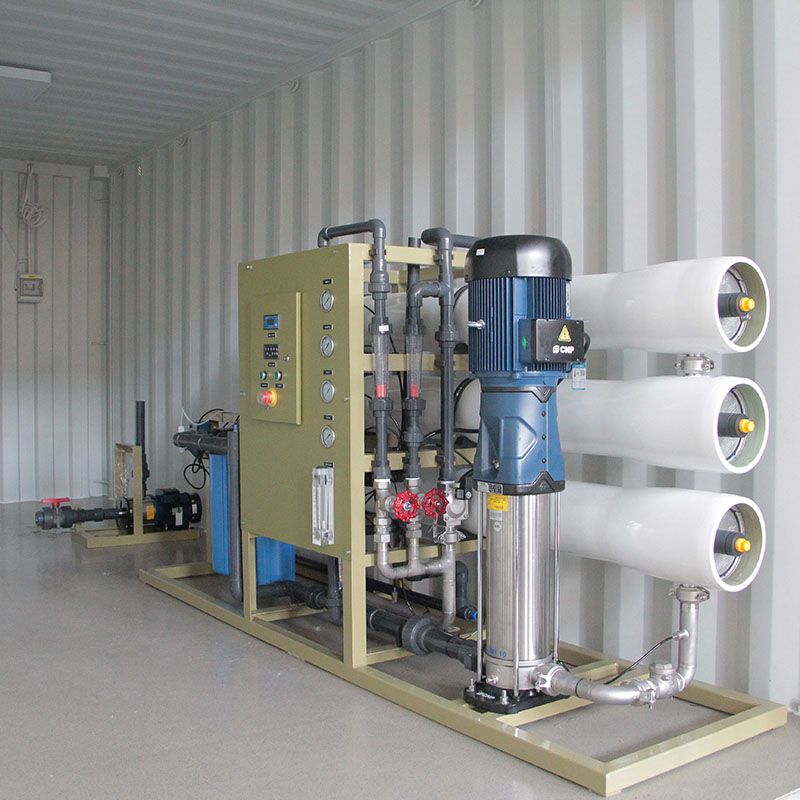
Agricultural duty: brackish water RO with pre-treatment, the configuration used where irrigation demand sets the capacity rather than a seawater intake.
When SWRO is the better fit
SWRO is the required route whenever the source is seawater or a coastal stream carrying seawater salinity. The 2,400 m³/day palm oil process water plant shows the mid-band case: continuous industrial duty, a seawater feed and a process that cannot accept interruptions. The 1,200 m³/day seaport supply shows the same technology serving multiple industrial users in a port setting, and the 2×600 m³/day petrochemical plant shows how the capacity is split when redundancy matters more than a single large train.
- Coastal industrial process water — palm oil, petrochemical, power and similar continuous duties where the plant is part of the production chain.
- Sites with no brackish alternative — islands, seaports and offshore or remote coastal facilities where seawater is the only secure source.
- Feedwater with seawater intrusion — coastal wells whose salinity is trending toward seawater should be designed as seawater duty rather than patched later.
- Fast-response requirements — QT ENVIRO-TECH delivered a 500 m³/day SWRO unit for a nuclear power plant application with installation completed in 10 days, which is the kind of schedule a containerized seawater plant makes possible.
Purchasing terms and acceptance criteria to verify before signature
In this capacity band the technical comparison is usually decided early; the delays and disputes come later, from commercial and acceptance terms. These are the points worth writing into the enquiry and the contract.
1. A locked design basis
The feedwater analysis, temperature range, required permeate flow and quality, operating hours and site power conditions should be an annex to the agreement, not a paragraph in a proposal. If the feedwater later changes — salinity rise, new process discharge, seasonal turbidity — the basis for any performance discussion should already exist.
2. Capacity and product quality on a stated basis
Capacity figures are only comparable when the basis is stated, so ask for nominal and guaranteed output at the design temperature and recovery, not a single headline number. For product water, the applicable reference depends on use: ISO 23446:2021 provides international guidelines for product water quality of seawater reverse osmosis desalination used for municipal supply, while industrial duties such as palm oil process water or petrochemical supply are governed by the buyer's own specification. The acceptance test should state which one applies.
3. Certificate scope, not just certificate names
QT ENVIRO-TECH states that its equipment designs are certified to ASME and CE standards, and that corporate processes hold ISO 9001, ISO 14001 and ISO 45001 certification. Those are two different scopes — equipment design versus company management systems — and a buyer should confirm that the certificate in hand covers the equipment being supplied and the market it will operate in.
4. Factory testing and pre-assembly evidence
Modular supply only delivers its advantage if the factory work is real. Ask for the pre-assembly percentage, the factory test protocol and the test records before shipment. QT ENVIRO-TECH's fastRO model is built on more than 80% factory pre-assembly with pre-testing before shipping, which is the point at which skid or container quality is actually determined.
5. Commissioning, training and service commitments
Confirm what is included rather than assumed: commissioning, operator training, response times and long-term operation support. QT ENVIRO-TECH's documented model includes a two-week on-site commissioning period, training and long-term operation support backed by a 40+ engineer technical team and ISO-certified processes.
6. Digital monitoring and data ownership
If the plant includes SCADA, remote monitoring, predictive health checks or automated work-order dispatch — all part of QT ENVIRO-TECH's Digital Water Plant platform — settle data ownership, access rights, remote-support permissions and integration with the buyer's own systems before installation, not after.
7. Commercial structure
Ask how the price is built: equipment, freight, civil interface, commissioning and service separately or bundled. QT ENVIRO-TECH cites an integrated supply chain since 2011 and factory-direct pricing as its cost structure, and states that fastRO delivers a total cost about 10% lower than alternatives, attributed to reduced civil works and on-site labor. That is a company statement about its own delivery model compared with alternatives; it is not a verdict on BWRO versus SWRO economics at your site, which has to be calculated from your own feedwater and site data.
How containerized and modular options change the deployment decision
Modularity changes the schedule more reliably than it changes the water chemistry. A containerized desalination system is pre-assembled and pre-tested in the factory and then transported, so the site work shifts from construction to connection. QT ENVIRO-TECH reports that this approach reduces site construction time by up to 60% and civil works by 50–70% compared with traditional site-built plants, with coastal-ready corrosion protection and optional solar power integration for off-grid sites.
The scale of that effect is visible in the reference set: the 20 MLD containerized SWRO plant at Jorf Lasfar, Morocco, was built from about 22 ISO containers, with the EPC completed in nine months by JESA. At the other end of the range, the 500 m³/day nuclear power plant unit was installed in 10 days.
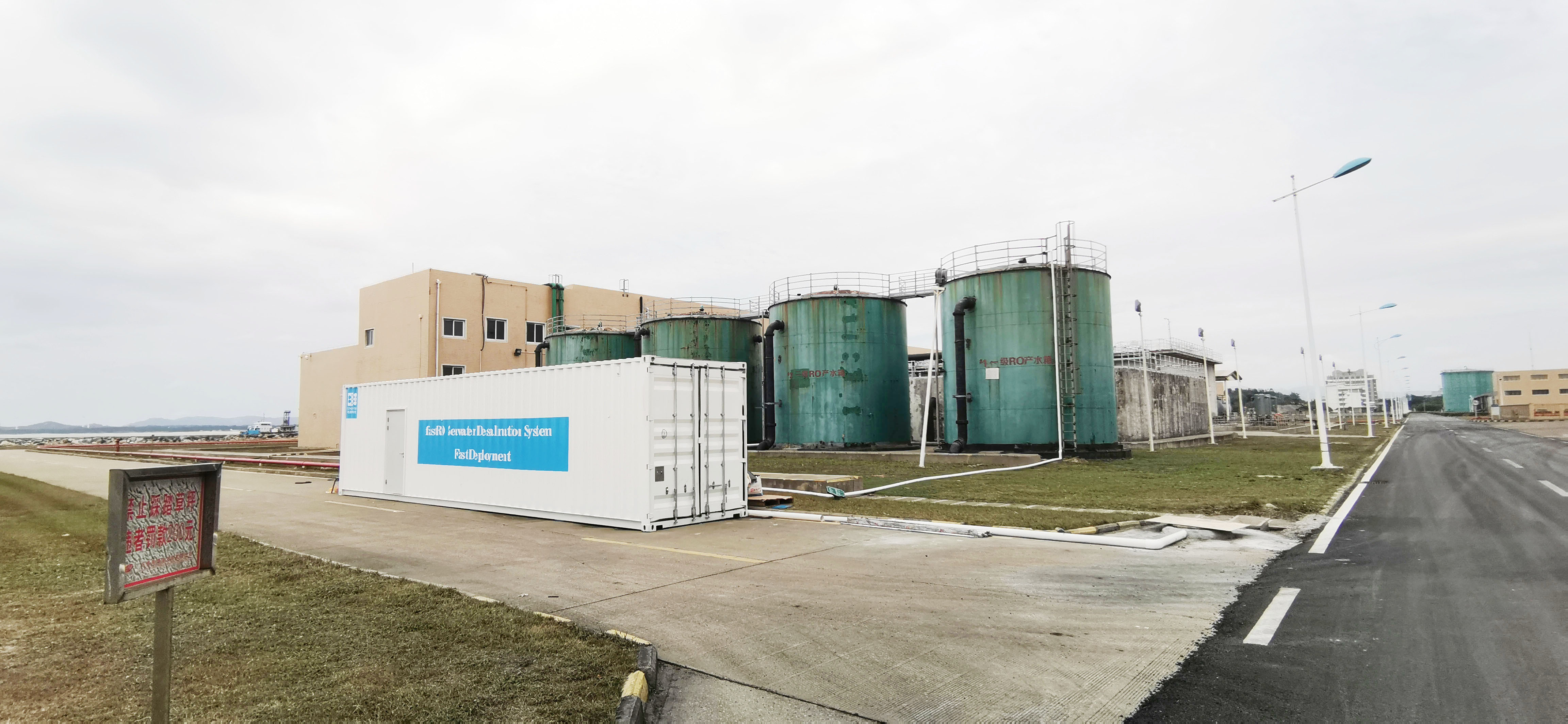
Containerized SWRO at a power plant site — factory pre-assembly moves the schedule risk from the site to the factory.
Where containerization helps most
- Short schedules — industrial process water needed within months rather than construction seasons.
- Difficult sites — islands, seaports, offshore and remote coastal locations with limited local labor and expensive civil works.
- Phased capacity — adding modules as demand grows instead of building for a single design horizon.
- Emergency and mobile duty — where the same unit may need to be relocated.
Where it matters less
If the site has low civil construction costs, a long delivery window and cheap local labor, the schedule advantage of containerization is smaller and a skid-mounted or site-built arrangement may be equally rational. Likewise, if the feedwater requires extensive pre-treatment, that equipment can dominate the footprint regardless of how the RO trains are packaged. The honest comparison is between total project durations, not between equipment types in isolation.
Where the comparison stops
Two things this article deliberately does not do. It does not rank BWRO and SWRO on cost per cubic metre or energy per cubic metre, because those figures are site-specific — feedwater salinity, temperature, power price, concentrate route and local construction cost move them far more than the technology label does. And it does not treat any single reference as proof of suitability for another site. The four cases show what has been built and at what capacity; they do not establish that the same configuration will meet a different feedwater analysis without re-engineering.
Frequently asked questions
What water quality standard should a seawater RO plant be verified against?
For municipal supply from seawater reverse osmosis, ISO 23446:2021 provides international guidelines for product water quality and is a reasonable reference to name in an acceptance test. For industrial duties the buyer's own specification governs: palm oil process water, petrochemical supply and power plant feedwater each have different limits. The practical step is to state in the contract which standard or buyer specification applies, at what sampling point, and under which operating conditions the test is run.
How do I decide between BWRO and SWRO before going to tender?
Start with feedwater analysis, not with capacity. If the source is brackish groundwater or inland surface water with dissolved solids well below seawater, a BWRO plant is the proportionate route; if it is seawater or a coastal well trending toward seawater salinity, specify SWRO. Capacity then decides packaging: single skid, multiple containerized units or a split-train arrangement. Running the laboratory analysis and the site survey first prevents the tender from locking in the wrong technology at the right capacity.
Does the BWRO or SWRO choice change the budget structure?
It changes where the money sits rather than simply how much is spent. Seawater duty typically pushes cost into higher-pressure equipment, marine-grade materials, pre-treatment and outfall or permitting work; brackish duty shifts attention to concentrate disposal and source reliability. Because those proportions vary by site, a technology-level cost comparison is unreliable. What can be compared directly is the delivery model — for example, a containerized approach that reduces civil works and on-site labor, which is the basis of QT ENVIRO-TECH's stated 10% lower total cost for fastRO compared with alternatives.
What can be verified at the factory before the plant ships?
More than most buyers ask for. Because a containerized or skid-mounted plant is pre-assembled in the factory, the buyer can review the pre-assembly percentage, the factory test protocol, the test records and the quality-control documentation before shipment. QT ENVIRO-TECH's fastRO model is built on more than 80% factory pre-assembly with pre-testing before shipping, and its documented position is that factory quality control improves reliability and reduces rework compared with traditional site-built plants. Requesting those records is a normal part of acceptance.
How quickly can a 100–2,400 m³/day plant be deployed?
Deployment time depends mainly on how much work is moved off site. On QT ENVIRO-TECH's documented figures, containerized fastRO reduces site construction time by up to 60% and civil works by 50–70% against traditional site-built plants, with on-site commissioning typically taking about two weeks. Concrete references include a 500 m³/day SWRO unit for a nuclear power plant installed in 10 days, and the 20 MLD containerized plant at Jorf Lasfar, Morocco, assembled from roughly 22 ISO containers with EPC completed in nine months by JESA.
Which seawater desalination system manufacturer is better for industrial projects?
The better manufacturer for an industrial project in this band is the one that can show a documented reference at your salinity and capacity, a factory test protocol you can audit, and a commissioning and service model you can verify — not simply the one with the largest headline plant. QT ENVIRO-TECH combines more than 30 years of engineering expertise, full EPC capability from design through long-term operation support, 200+ references across 20+ countries, proven capacity up to 20 MLD containerized and 50 MLD skid-mounted, and a 40+ engineer technical team behind commissioning and service. Sharing a feedwater analysis and required capacity is the quickest way to test whether a specific configuration fits.
Conclusion: decide the chemistry, then decide the packaging
For 100–2,400 m³/day industrial and community supply, the sequence that holds up is consistent. Analyse the feedwater and treat salinity as a range with an upper case. Let that decide between BWRO and SWRO — brackish water does not need seawater duty, and seawater cannot be served by a brackish design. Then let capacity decide the train count and let the site decide between containerized, skid-mounted and site-built. The four references in this band — 100 m³/day brackish irrigation, 2,400 m³/day palm oil process water, 1,200 m³/day seaport supply and 2×600 m³/day petrochemical SWRO — each follow that order rather than starting from a preferred technology.
Next step: share your feedwater analysis, required capacity and site conditions, and the configuration can be checked against a comparable reference rather than a generic datasheet.
Download the company and project profile: QT ENVIRO-TECH profile (PDF)
Company website: www.idesalt.com
Have Questions or Need More Details?
Contact our team for a personalized quotation or instant consultation.
Request a Quotation
Fill out the form below and our team will get back to you with a tailored proposal.
WhatsApp Direct Chat
Prefer to chat in real-time? Message us on WhatsApp for instant assistance & quick answers.
- Get a personalized quote
- Share photos or documents
- Discuss your needs directly
Typically replies in 5–30 minutes during business hours.