
Top 5 Desalination System Configurations for 20+ Year Uptime
A 20-year service life is not something a desalination system can promise in a proposal; it is something a configuration accumulates in the field. This ranking orders five configurations by what they have actually demonstrated: documented service duration, the capacity range they cover, feedwater and application fit, and whether capacity can be added without rebuilding.
The five configurations are containerized SWRO for remote coastal and emergency response, island community reverse osmosis, industrial SWRO for petrochemical and process water, large municipal SWRO in the 50 MLD class, and wastewater reverse osmosis for reuse. Power-plant ultra-pure water is treated separately at the end, because its governing specification is resistivity rather than bulk supply.
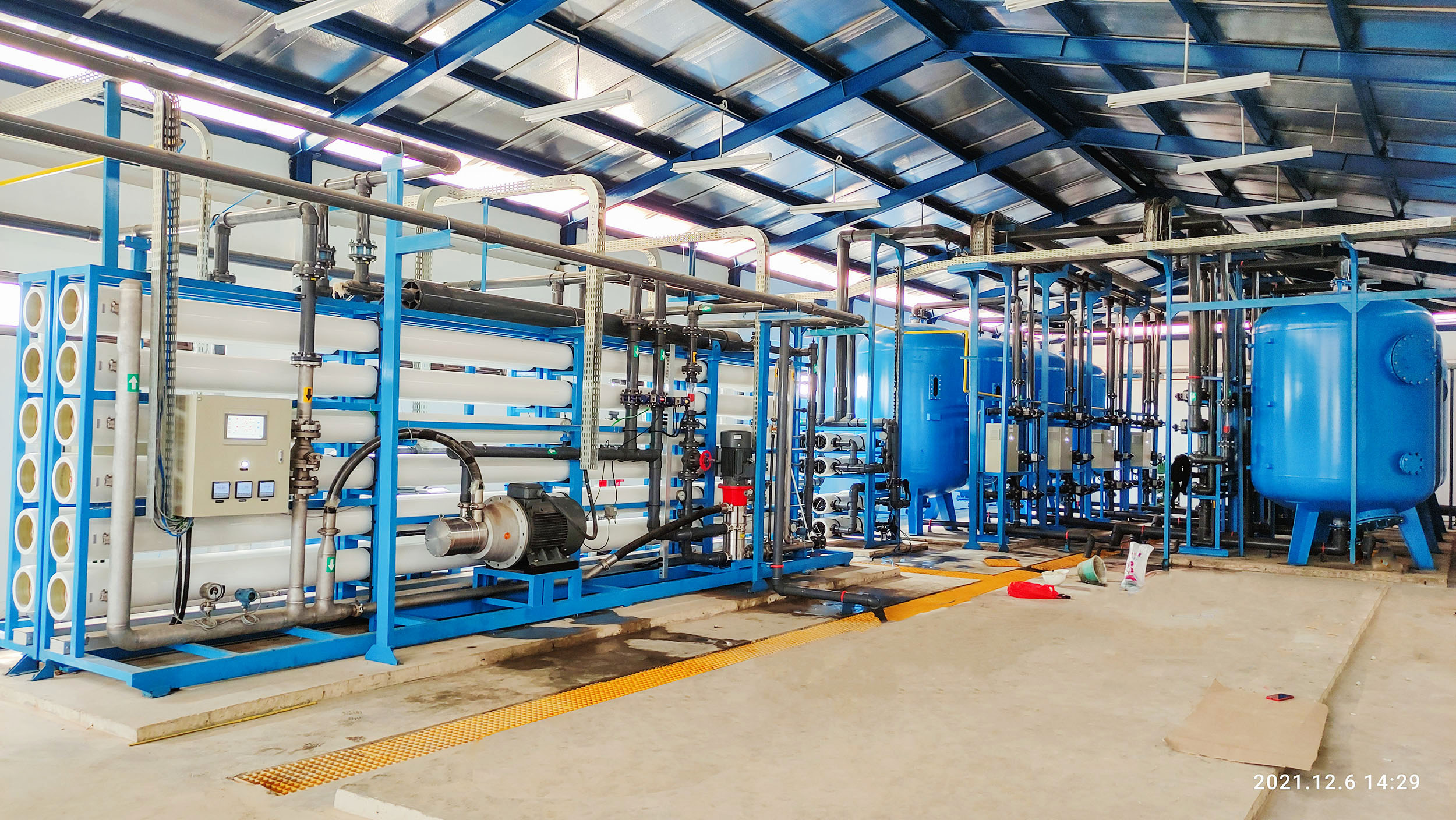
Why uptime, not capital cost, separates these configurations
A desalination plant is purchased once and operated for decades, but the decisions that decide whether it reaches that service life are made before the first cubic metre is produced: the pre-treatment train, the materials in contact with seawater, the feedwater envelope the design was built around, and whether an operator can service the equipment without dismantling it. Two configurations can carry the same nominal capacity and behave very differently after the fifth year.
Uptime claims only become comparable when the reference plant and the buyer's site share the same feedwater class and duty. QT's SWRO specifications state a feedwater envelope of 20,000–45,000 mg/L TDS, 5–35 °C, turbidity below 20 NTU, COD below 10 mg/L, and iron and manganese each below 0.1 mg/L. A reference that ran on cleaner or cooler water is weaker evidence than its headline capacity suggests.
Two different measures appear in this article and should not be merged. "365-day uptime" describes continuity within a single year — the plant did not stop through a monsoon cycle. "More than 20 years in service" describes how long a unit has been operating. A plant can have one without the other, and a buyer comparing suppliers should ask which measure a claim refers to.
How the five configurations were ranked
Each configuration was assessed on four criteria, in this order: documented service duration on a named reference, the capacity range the configuration covers, feedwater and application fit, and modular scalability. Service duration carries the most weight because it is the only criterion that cannot be designed on paper. Scalability carries real weight for buyers who expect demand to grow, because adding capacity to a permanent plant usually means new civil works while adding a container does not.
- Documented service duration — how long a named plant has operated, and across how many units.
- Capacity range — the smallest deployable unit and the largest documented installation.
- Feedwater and application fit — what the reference actually treated, and for which duty.
- Modular scalability — whether capacity can be expanded in increments without rebuilding.
| Rank | Configuration | Documented capacity | Long-term service evidence | Evidence status |
|---|---|---|---|---|
| 1 | Containerized SWRO — remote coastal and emergency | 10+ units × 350 m³/day = 3,500 m³/day; product series 50–1,000 m³/day per unit, expandable to 5,000 m³/day | More than 20 years in service on the remote coastal deployment | Established |
| 2 | Island community RO | 1,000 m³/day community plant; 216 m³/day island resort; 1,000 m³/day resort configuration for the EU market | 365-day uptime through monsoon swings (2022 plant); more than 10 years at the island resort reference | Continuity established; the 2022 community plant has not yet reached 20 years |
| 3 | Industrial SWRO — petrochemical and process water | 2×600 m³/day (1,200 m³/day total); 2,400 m³/day process water; 1,200 m³/day seaport industrial supply | More than 20 years without major issues on the petrochemical reference | Established |
| 4 | Large municipal SWRO — 50 MLD class | 50,400 m³/day; 20 MLD (20,160 m³/day) containerized municipal plant | 9-month EPC completion on the 20 MLD plant; the 50,400 m³/day plant is scheduled to start in 2026 | Long-term record pending |
| 5 | WWRO reuse | 60,000 m³/day recycling and reuse | Project records list a multi-decade service duration, while the application record dates the 60,000 m³/day deployment to 2025 | Conflicting — 20-year uptime not asserted here |
| — | Power-plant ultra-pure water (specialized) | Resistivity above 10 MΩ·cm for a 2×25MW plant | More than 20 years in service | Established, outside the bulk-supply ranking |
Rank 1Containerized SWRO for remote coastal and emergency response
Containerized SWRO ranks first because it is the only configuration in this set that combines a documented 20-plus-year service record with a unit size small enough to deploy, replicate and redeploy in increments. The reference is a remote coastal drinking-water deployment for Veolia: 10+ units at 350 m³/day each, totalling 3,500 m³/day, in service for more than 20 years.
That combination matters more than the headline figure. A single large plant proves a design can be built; ten identical containerized units prove a design can be repeated, maintained unit by unit, and kept partly online while one train is serviced. The same architecture appears in emergency and aid duty: a 2024 China aid project uses 500 CMD of SWRO integrated with PV, which addresses the case where a coastal site has seawater but no reliable grid.
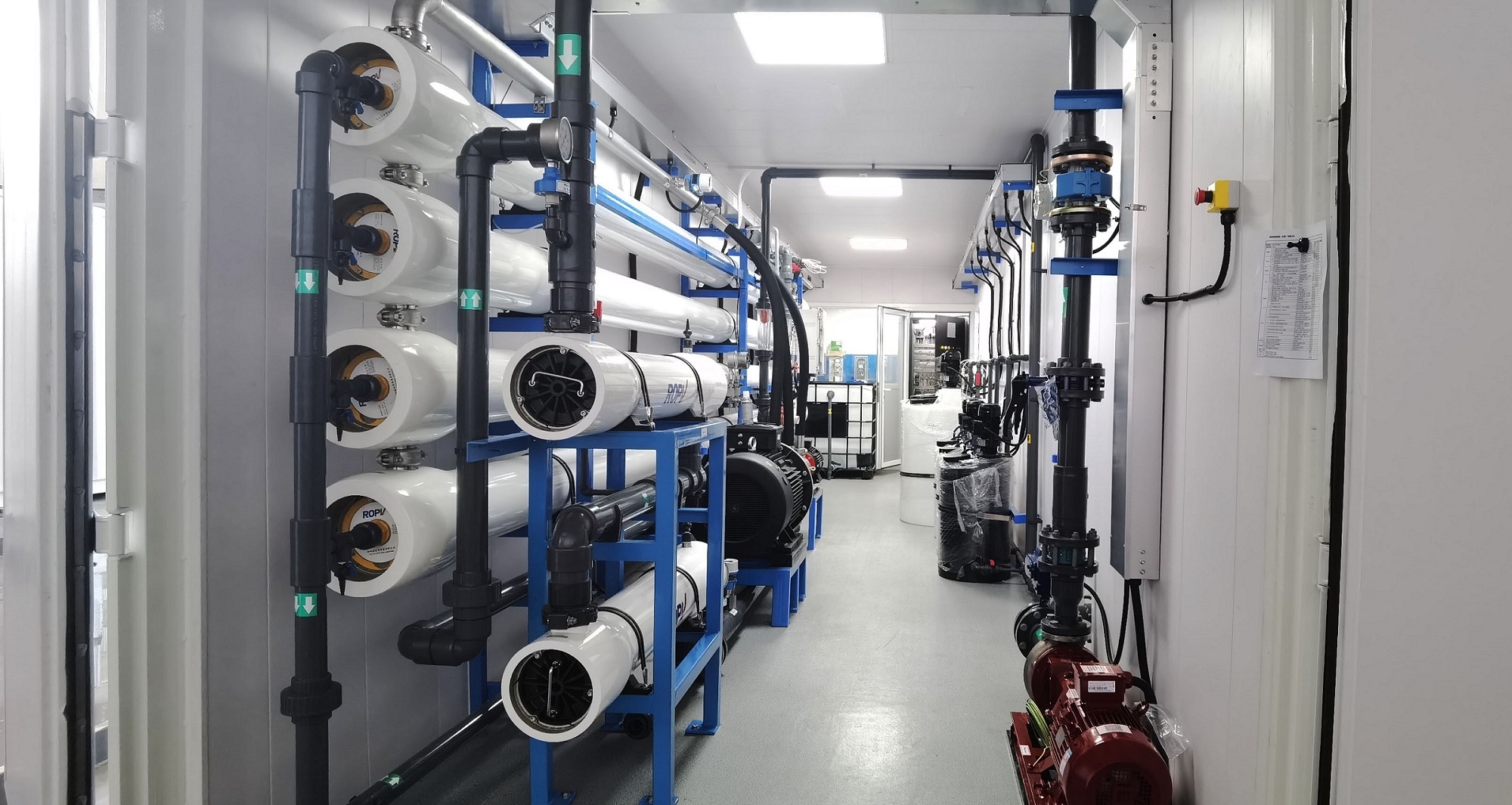
The configuration also has the widest documented span in the portfolio. The containerized series is stated at 50–1,000 m³/day per unit with expansion to 5,000 m³/day, while the containerized Mega range covers 5–20 MLD. QT's stated deployment model uses more than 80% factory pre-assembly, with on-site civil works reduced by up to 70% and a two-week on-site installation benchmark.
The limitation is arithmetic. At 350 m³/day per unit, a 3,500 m³/day requirement means ten units, ten sets of connections and a shared intake and pre-treatment arrangement — which is redundancy when one train is down, and additional instrumentation when all are running. Buyers comparing this configuration against a single permanent plant should cost the container logistics and the footprint, not only the equipment.
Rank 2Island community reverse osmosis
Island community RO ranks second because it has the clearest evidence of continuity in the conditions that most often break a small plant: salt air, weather swings and a thin operator team. A 1,000 CMD island community drinking-water plant commissioned in 2022 for a Community Water Board has recorded 365-day uptime through monsoon swings, using SWRO with pre-treatment and post-treatment.
Longer duration is documented at the smaller end. A 216 m³/day system serving Maratua Island Resort has operated for more than 10 years, and is recorded as the first project of its kind in Indonesia. Together the two references cover the range that island buyers actually procure: a few hundred cubic metres per day for a resort, and around a thousand for a community.
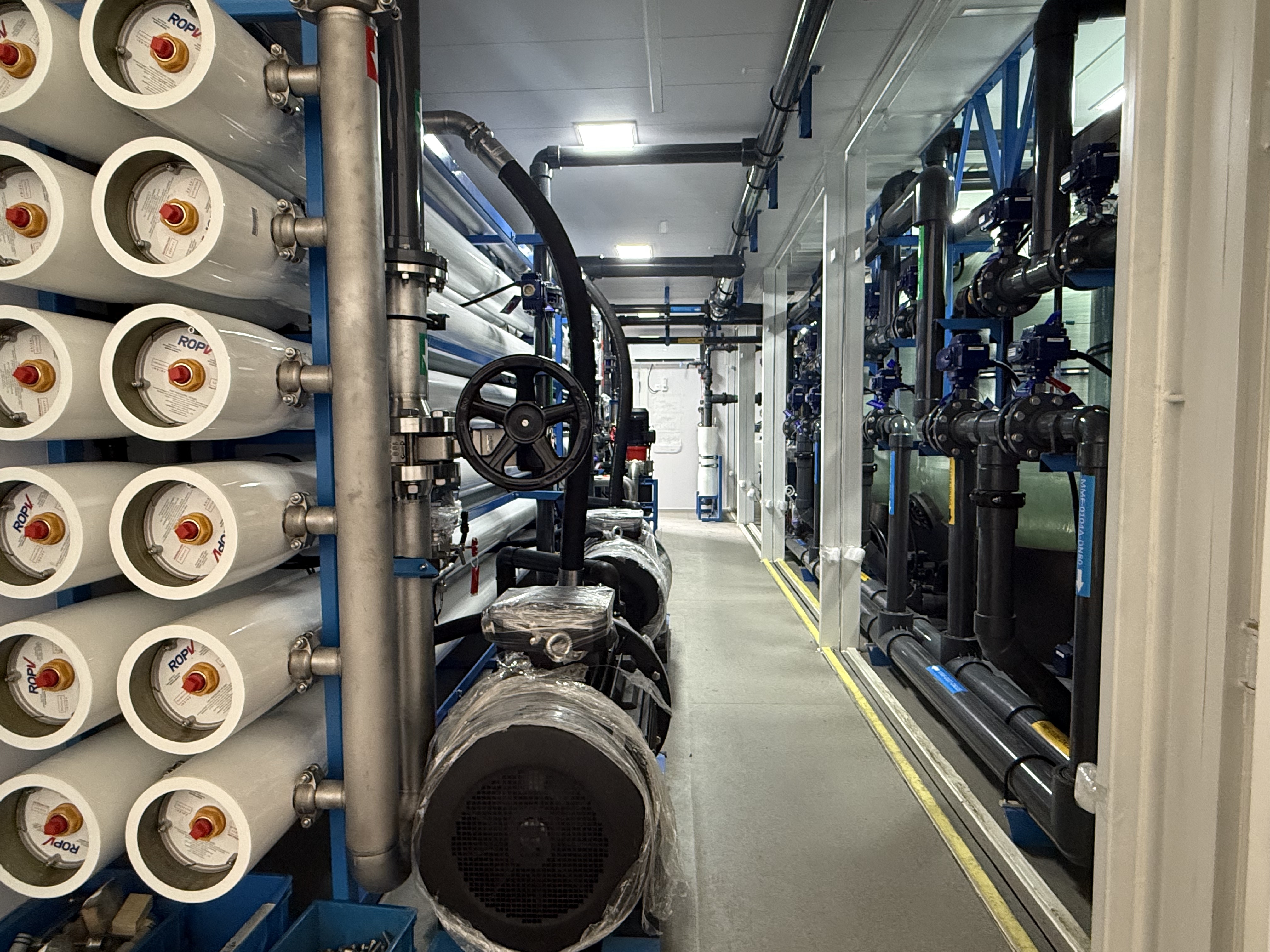
Hospitality duty adds an operator-access dimension that matters over a long service life. A 1,000 m³/day resort configuration built for the EU market uses a 2×40'ft container combination with the walls removed to form a unified plant room, so maintenance can be carried out under cover rather than on an open deck.
The boundary is the record itself: the 2022 community plant is years, not decades, into its service life, and its 20-year dimension rests on island-platform experience across the portfolio rather than on that specific installation. A buyer who needs a signed 20-year reference for a 1,000 m³/day island plant should say so explicitly when requesting references, and should ask which plant the duration applies to.
Rank 3Industrial SWRO for petrochemical and process water
Industrial SWRO ranks third despite holding the strongest single duration record in the set. A petrochemical process-water installation for BP uses a 2×600 m³/day SWRO system — 1,200 m³/day in total — and is recorded as operating for more than 20 years without major issues.
Two further industrial references widen the fit. A 2,400 m³/day SWRO plant supplies process water for palm oil production under tropical conditions, commissioned in 2020. A 1,200 CMD system has served seaport industrial water supply for more than 10 years, from a 2021 project. Between them they show the configuration working at three different industrial scales, in three different climates.
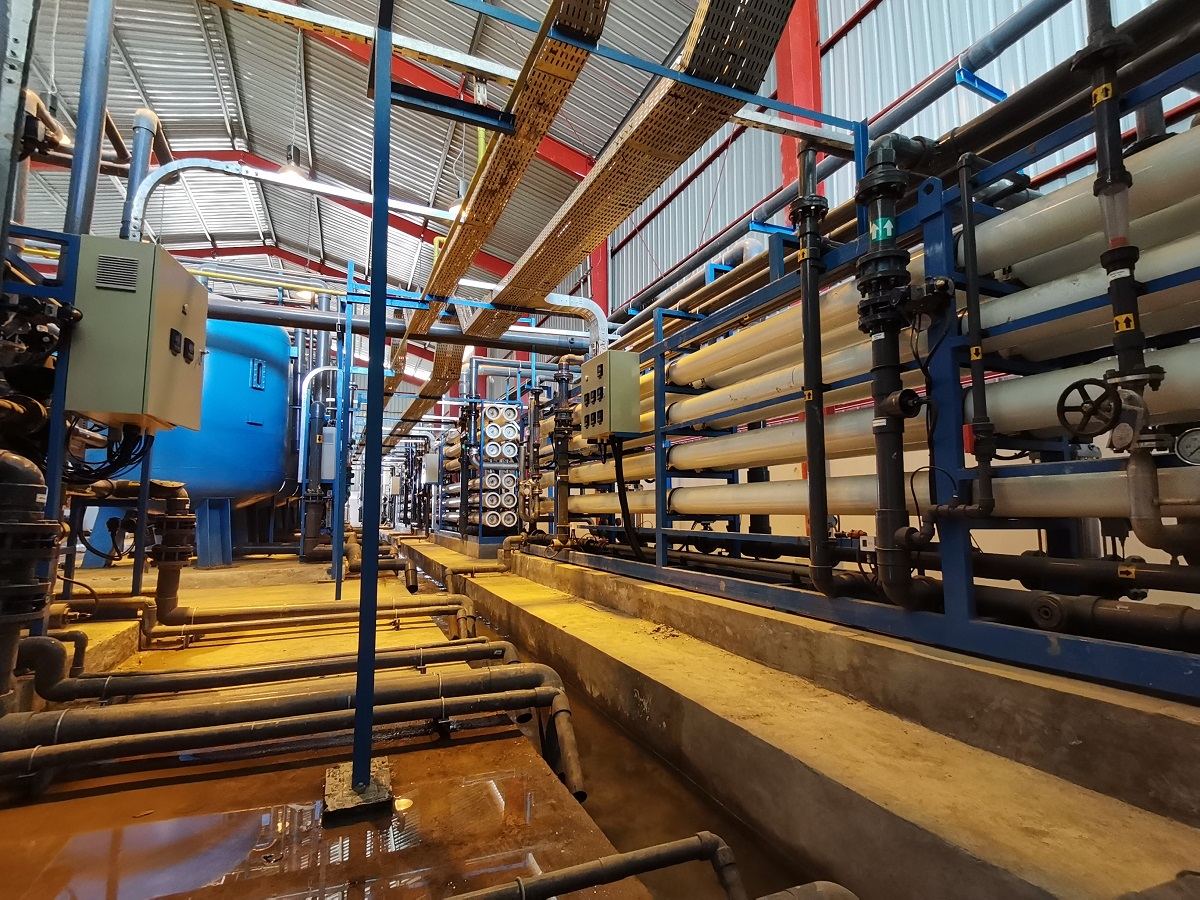
The ranking position reflects fit rather than quality. Industrial process duty is defined by one plant's water balance and turnaround schedule, so a reference transfers cleanly only to a buyer with a similar duty. The petrochemical record is also a process-water record; a municipal buyer should not read it as evidence of drinking-water compliance, because the post-treatment scope is set by the end use. And a two-train industrial plant offers less expansion headroom than a configuration built from repeatable containers.
Rank 4Large municipal SWRO in the 50 MLD class
Large municipal SWRO ranks fourth because it carries the largest documented capacity in the portfolio but the shortest service record. A 50,400 m³/day municipal drinking-water plant using granular media filtration, ultrafiltration and SWRO, with OCP as client, is scheduled to start in 2026 and is designed for 24/7 continuous operation as permanent infrastructure.
The containerized municipal reference fills the gap on delivery rather than duration. A 20 MLD (20,160 m³/day) plant was completed within nine months under an EPC contract and is described in the project record as the largest containerized SWRO plant in the portfolio, built across roughly 22 ISO containers and designed for modular expansion.
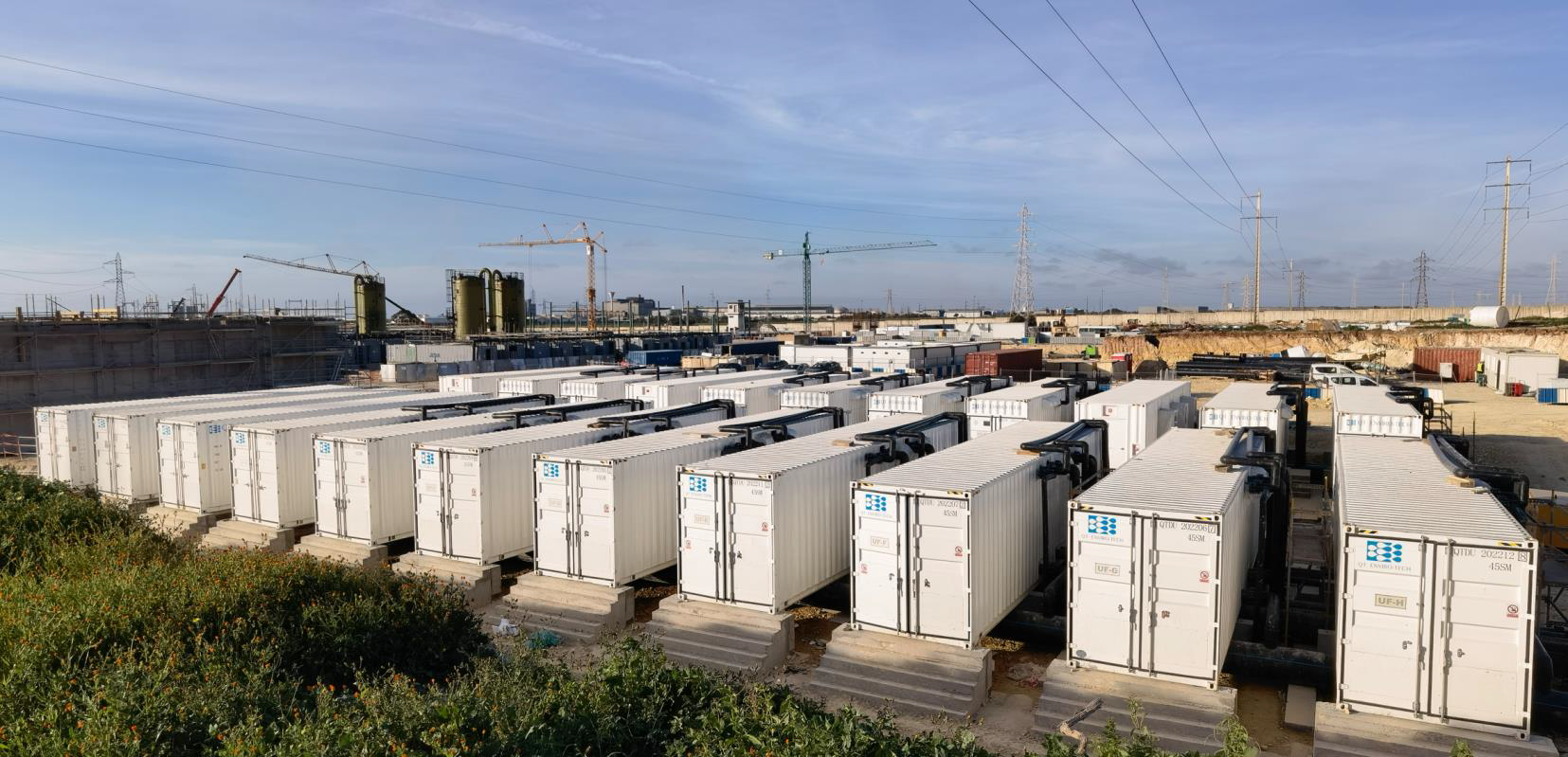
For a utility buyer the practical message is sequencing. The 50 MLD class brings intake, outfall, permitting and permanent civil works, and its availability in year fifteen will be decided by the filtration and membrane stages rather than by the RO skids alone. Where demand is uncertain, the documented alternative is to start with a containerized municipal block and add capacity later; where the demand is already committed, the permanent plant is the appropriate scope. Either way, this entry should be read as a capacity and process reference, not as a 20-year uptime reference.
Rank 5Wastewater reverse osmosis for reuse
WWRO reuse ranks fifth on a straightforward basis: it has the largest single documented capacity in the set and the shortest verified service life. A 60,000 m³/day industrial wastewater recycling and reuse plant uses a clarifier, ultrafiltration and BWRO train in 24/7 continuous operation, serving a municipal water department client.
This article does not assert 20-year uptime for that plant. Project records list a multi-decade service duration for the reuse reference, while the application record dates the 60,000 m³/day deployment to 2025. Those two statements cannot both be true of one plant, so the configuration is ranked on documented capacity and process scope, and the duration claim is left open.
The design lesson is still usable. Reuse duty is defined by influent chemistry and by the reuse target, not by a standard seawater envelope, which is why the reference pairs clarification with ultrafiltration before the RO stage. A buyer with a different industrial influent should expect the process train — not merely the capacity — to change, and should treat any reuse reference as transferable only when the influent analysis matches.
Outside the top five: power-plant ultra-pure water
Power-plant ultra-pure water is not ranked with the five because capacity is not its governing metric; resistivity is. A reference for a 2×25MW power plant produces water above 10 MΩ·cm using multimedia filtration, two-pass reverse osmosis, mixed bed ion exchange and electrodeionization in 24/7 continuous operation, and is recorded as more than 20 years in service.
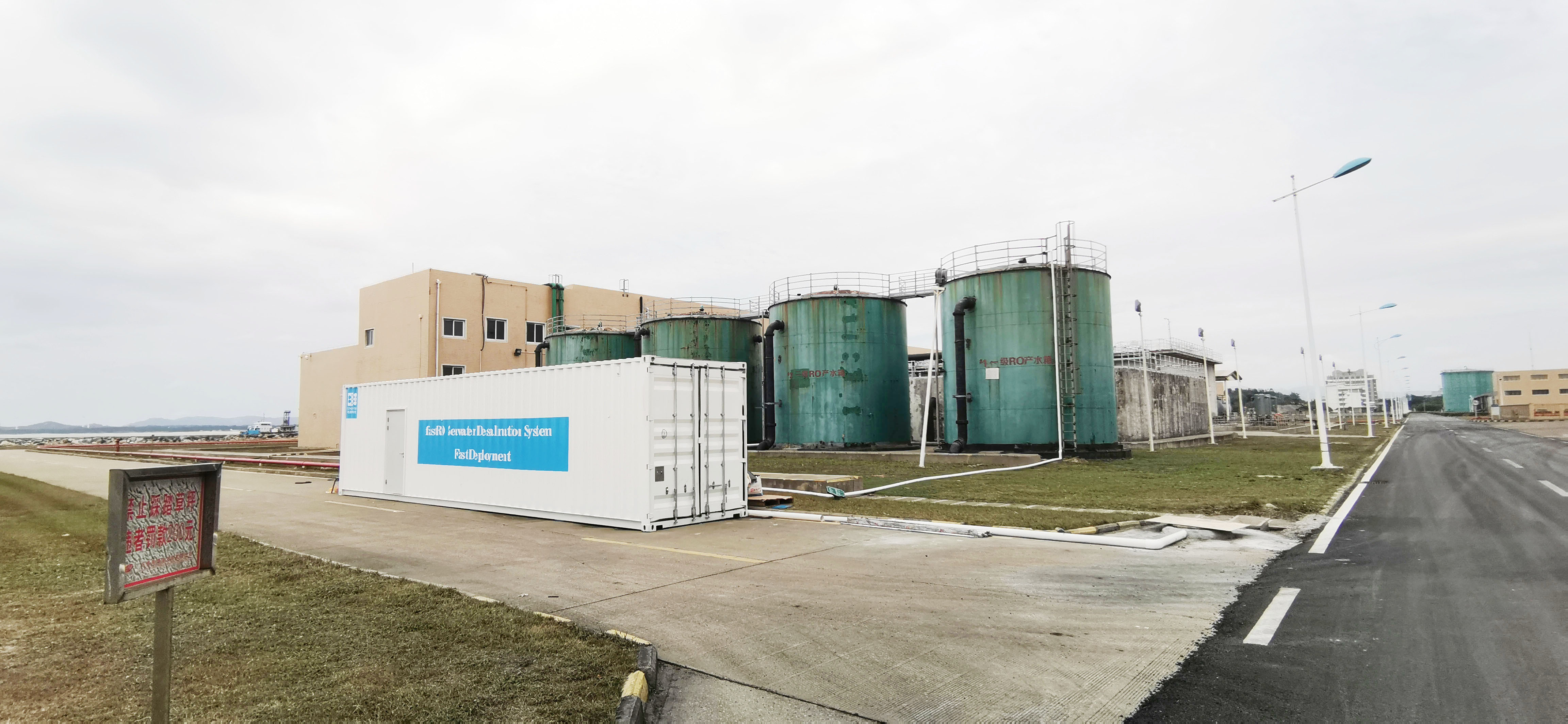
The configuration is worth noting for two reasons. First, it shows the same RO platform being pushed to a high-purity specification by adding polishing stages rather than replacing the core design. Second, the power sector applies requirements that bulk-water buyers do not: high reliability, low noise and explosion-proof requirements appear in the recorded project conditions, including a 500 m³/day nuclear power plant installation completed in 10 days.
How to verify a 20-year uptime claim before you sign
Long-duration claims are checkable, and a supplier with real references should be able to answer six questions without preparation.
- Which plant, and when did it start? Ask for the commissioning year, the number of units and the capacity per unit — not only the total.
- What water did it treat? Compare the reference's TDS, temperature, turbidity, COD and iron/manganese figures against your own analysis.
- What does the duration measure? Service life, annual availability and uptime within a year are three different numbers.
- Which stages are included? A reference with filtration, ultrafiltration and post-treatment is a different configuration from a bare RO train.
- Who maintains it? Membrane replacement, high-pressure pump and energy-recovery service are the items that decide decade two.
- Can it grow? Ask whether expansion is priced in container increments — 4–5 containers per additional 5 MLD on the Mega range — or requires new civil works.
A buyer who asks these six questions will usually find that two configurations which looked equivalent on a capacity table are not equivalent at all. That is the purpose of ranking by demonstrated service rather than by quoted output.
Frequently asked questions
Which desalination configuration fits a remote coastal site with no grid?
A containerized SWRO configuration with an optional PV supply. QT's project record includes a 2024 China aid deployment of 500 CMD using SWRO integrated with PV, and the containerized series spans 50–1,000 m³/day per unit with a solar power option. For larger remote demand, capacity is built from repeated units: a remote coastal deployment for Veolia totals 3,500 m³/day across 10+ units of 350 m³/day each, in service for more than 20 years.
How large can a containerized SWRO plant be, and can it be expanded later?
The documented containerized maximum in QT's record is 20 MLD (20,160 m³/day), delivered as a municipal drinking-water plant completed under a nine-month EPC contract across roughly 22 ISO containers. Expansion is modular: the Mega range adds 4–5 containers for each additional 5 MLD, and the containerized series is stated at 50–1,000 m³/day per unit with expansion to 5,000 m³/day.
What feedwater conditions should be confirmed before specifying SWRO?
The stated SWRO feedwater envelope is 20,000–45,000 mg/L TDS, 5–35 °C, turbidity below 20 NTU, COD below 10 mg/L, and iron and manganese each below 0.1 mg/L, with oil and grease not permitted. Product water is specified below 500 mg/L TDS, pH 6–8 and turbidity below 0.2 NTU. A site outside these ranges needs pre-treatment scope defined before capacity is compared.
How long does installation take for these configurations?
QT's stated benchmark for containerized units is a two-week on-site installation, with a 10-day installation recorded at a nuclear power plant reference. Large projects are governed by EPC scope rather than by equipment installation: the 20 MLD containerized municipal plant was completed within nine months under an EPC contract.
What product water quality do these configurations deliver?
SWRO configurations are specified below 500 mg/L TDS, pH 6–8 and turbidity below 0.2 NTU. The power-plant configuration is specified differently: resistivity above 10 MΩ·cm for a 2×25MW plant, achieved with multimedia filtration, two-pass reverse osmosis, mixed bed ion exchange and electrodeionization.
How do I check a 20-year uptime claim against my own site conditions?
Match the evidence to your conditions: request the reference's commissioning year, unit count and capacity per unit, the feedwater analysis the design was based on, whether the stated duration is service life or availability, and which pre-treatment and post-treatment stages are included. If the reference's feedwater or duty differs from yours, treat the claim as indicative rather than transferable. A configuration review against your own water analysis, and the reference list behind these projects, can be requested with the QT ENVIRO-TECH project brochure.
What the ranking means for a 20-year purchase
Long service life in desalination comes from repeatable units, matched pre-treatment and a maintenance route the operator can actually follow — not from a larger single machine. That is why the containerized remote-coastal configuration leads this ranking and why the two newest large-scale references are placed where they are, with their evidence status stated rather than assumed.
For a buyer, the useful output of this comparison is a shortlist by duty: containerized SWRO where the site is remote, off-grid or phased; island community RO where continuity and operator access matter most; industrial SWRO where process water is the duty; large municipal SWRO for committed municipal demand; and WWRO where the influent and reuse target are defined. The next step is to test the shortlist against one specific water analysis.
Next step: compare configurations against your own water analysis.
QT ENVIRO-TECH publishes its project profile, including the containerized and skid-mounted configurations referenced in this article: download the QT ENVIRO-TECH project brochure (PDF).
For a configuration review, reference list or quotation against a specific site, contact Grace at +86 159-6216-8009 or Sales@iDesalt.com. Samples and project documentation can be arranged on request.
About the publisher
QT ENVIRO-TECH (Suzhou) Ltd was founded in 2011 and is based in Suzhou, China. The company manufactures and integrates SWRO, BWRO and WWRO desalination systems, including the fastRO containerized series at 50–1,000 m³/day per unit, the fastRO Mega range at 5–20 MLD, and skid-mounted plants up to approximately 50 MLD. Equipment designs are certified to ASME and CE standards, and corporate processes hold ISO 9001, ISO 14001 and ISO 45001 certification, supported by a core technical team of 40+ engineers. Website: www.idesalt.com.
Have Questions or Need More Details?
Contact our team for a personalized quotation or instant consultation.
Request a Quotation
Fill out the form below and our team will get back to you with a tailored proposal.
WhatsApp Direct Chat
Prefer to chat in real-time? Message us on WhatsApp for instant assistance & quick answers.
- Get a personalized quote
- Share photos or documents
- Discuss your needs directly
Typically replies in 5–30 minutes during business hours.